

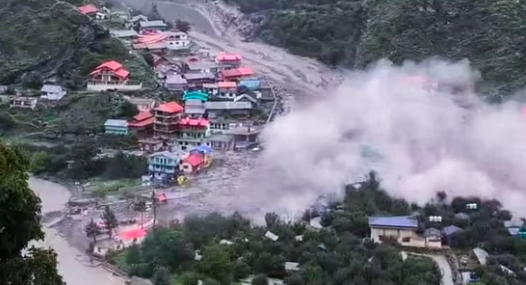
In another somber reminder of nature’s wrath and human fragility, the picturesque mountains of Uttarkashi were transformed into a scene of destruction on Tuesday afternoon. A surprise cloudburst at 1:40 PM caused fatal flash floods in the Dharali and Sukhi Top areas of Uttarakhand. Five people have been confirmed dead, more than 100 are missing, villages are buried under rubble, houses swept away in seconds.
Images and videos from the spot depict walls of dirty water sweeping through the Kheer Gad region in Harsil, uprooting trees, demolishing houses, and swallowing roads. The once picturesque getaway is now the epicenter of another Himalayan disaster.
But it’s not a one-time occurrence. In the past two decades, the Indian Himalayas — a vulnerable and ecologically sensitive region — have seen an alarming rise in the number and scale of disasters. Scientists and ecologists have time and again cautioned that unchecked infrastructure growth, deforestation, and global warming are making this erstwhile pristine ecosystem a high-risk disaster zone.
Here’s a flashback to seven of the most fatal tragedies that have rocked the Indian Himalayas in recent times, including the current Uttarkashi tragedy.
August 2025: Cloudburst and Flash Floods in Uttarkashi
The recent tragedy in Uttarkashi is a grim reminder of how exposed mountain areas have become. Flash floods caused by a cloudburst washed away Dharali and Sukhi Top, claiming the lives of at least five people and leaving more than 100 missing. Emergency teams have been sent in, but bad weather and swollen roads are making rescue operations difficult.
Experts attribute this abnormal weather phenomenon to shifting climatic patterns, with the region witnessing an unusual increase in short-term, high-intensity rainfall.
November 2023: Silkyara Tunnel Collapse, Uttarakhand
In November 2023, a yet-to-be-opened tunnel in Uttarkashi collapsed, trapping 41 laborers for 17 days. All of them were rescued miraculously following a multi-agency operation with high-tech drilling and global assistance.
Though the rescue was a success, the event illustrated the risks of uncontrolled development in geologically unstable areas. The Himalayas are young mountains, still capable of shifting and collapsing — but enormous tunnels, dams, and roads keep getting excavated through them with scant regard for ecological security.
February 2021: Chamoli Glacier Burst and Flood
One of the world’s most catastrophic recent disasters hit Chamoli in February 2021, when a segment of the Nanda Devi glacier ruptured, causing a violent flash flood in the Rishiganga and Dhauliganga rivers. The flood wiped out two hydropower plants and claimed more than 200 lives.
The disaster reignited controversy on the construction of hydropower infrastructure in glacial areas, with researchers highlighting that rising temperatures were hastening glacier melting and enhancing the possibility of glacial lake outburst floods (GLOFs).
June 2013: Kedarnath Cloudburst and Flash Floods
The 2013 Kedarnath tragedy is considered one of the worst natural disasters in Indian history. A multi-day cloudburst led to rivers such as the Mandakini and Alaknanda overflowing and swelling, washing away entire villages, roads, and thousands of lives.
Official records put the number of dead at more than 5,000, with higher unofficial estimates. The sacred town of Kedarnath was well-nigh protected by a blanket of debris, only its temple building surviving miraculously.
The disaster focused national attention on the dangers of uncontrolled construction, tourism, and climate change in the Himalayas.
July 2004: Flash Floods in Himachal Pradesh
In July 2004, Himachal Pradesh saw catastrophic flash floods after heavy rainfall. Over 100 lost their lives, and scores of houses were washed away. Major roads linking remote hill towns were cut off, showcasing the susceptibility of mountain states to natural disaster.
The floods also hurt important hydropower projects and raised concerns about constructing big dams and power plants without proper disaster preparedness.
October 1991: Uttarkashi Earthquake
Far earlier than the climate discussion gained prominence, the region experienced one of its most fatal seismic tragedies — the 1991 Uttarkashi earthquake. At a magnitude of 6.8 on the Richter scale, the earthquake resulted in the deaths of more than 700 individuals and left thousands injured. Whole villages were reduced to rubble, and access via roads was severed for days.
This tragedy produced the first serious demands for stronger building regulations and earthquake-resistant construction methods in the Himalayas, but enforcement has continued patchy to the present day.
July 1970: Alaknanda Floods
In 1970, there was a huge flood in the Alaknanda River that ruined large sections of Uttarakhand. Caused by torrential rain and huge landslides, the flood destroyed hundreds of houses, roads, and even sections of pilgrimage paths.
This was among the first mega-disasters ever documented in the Garhwal Himalayas and came as an early warning of the destructive power of monsoon-fed rivers in the area.
Why Are These Disasters Increasing?
The Indian Himalayas are among the most seismically and ecologically sensitive areas on the planet. But a set of factors is making disasters more deadly:
Climate change: Rising temperatures are melting glaciers at a faster rate and raising erratic rainfall.
Uncontrolled construction: Roads, tunnels, and hydropower developments are coming up without the necessary ecological studies.
Deforestation: Cutting down trees for urbanization raises the risk of landslides.
Tourism pressure: Excessive tourism and unmanaged tourism are putting pressure on delicate ecosystems.
What Needs to Change?
Experts call for the Himalayas to be dealt with as an ecologically safeguarded area. Development has to be restricted and guided by sustainability. Early warning systems, robust disaster response infrastructure, and stricter implementation of environmental standards are crucial.
As the latest Uttarkashi tragedy unfolds, it’s clear that nature’s warnings are becoming louder and more frequent. Whether we listen — and act — could decide the future of the Indian Himalayas.
