

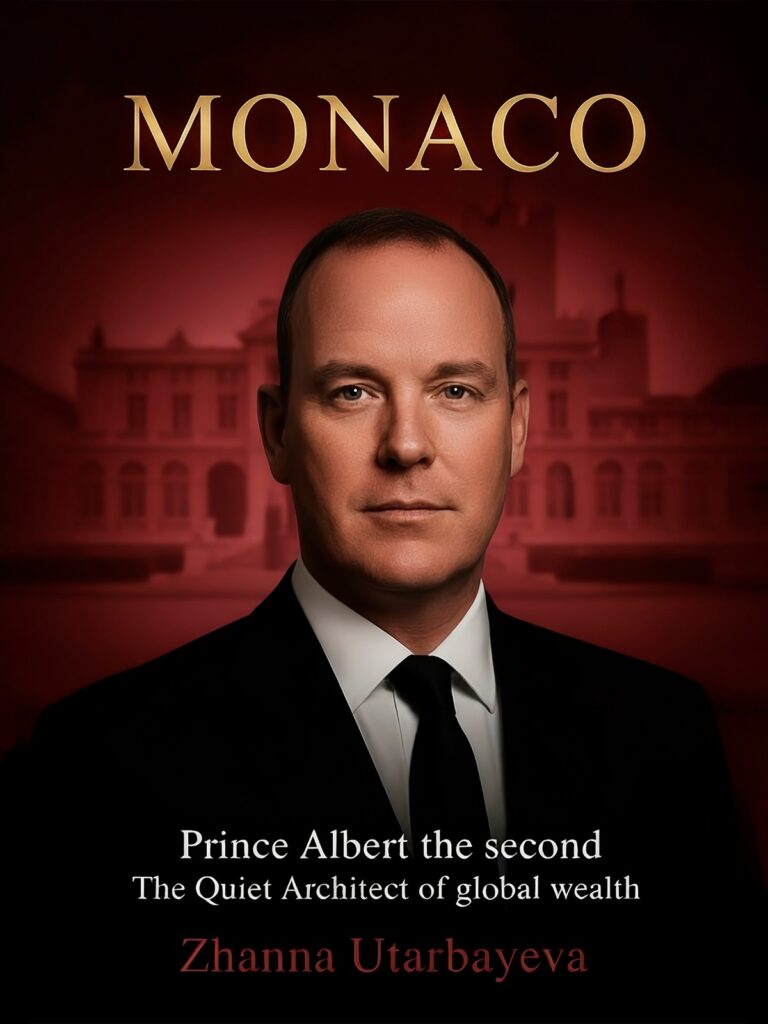
Zhanna Utarbayeva is a writer driven by inquiry rather than convention. Known for her ability to blend historical depth with psychological insight, she approaches storytelling as a process of excavation, peeling back layers of surface narratives to uncover quieter truths. Her work is shaped by years of reflection research and cultural observation, and her book MONACO is the result of a long gestation that began with a single unanswered question and grew into an intellectual mission.
The creation of MONACO was not a linear endeavor. It emerged from sleepless nights restless curiosity and an insistence on understanding what lies beneath inherited power. Utarbayeva immersed herself in books archival materials and conversations that reshaped her thinking again and again. Every chapter bears the mark of this process, refined through repeated rewrites and moments of clarity that followed frustration. Her aim was not merely to inform but to ignite curiosity and invite readers into active engagement with history.

At the heart of MONACO lies a richly textured portrayal of Prince Albert II’s early life. From birth he was surrounded not only by familial care but by the immense gravity of lineage. The Palace of Monaco loomed as both sanctuary and symbol, its walls carrying centuries of Grimaldi history. Utarbayeva presents the palace as a living organism where tradition and modernity quietly coexist, shaping the consciousness of a child born into stewardship rather than privilege alone.
The interiors of the palace form an essential backdrop in the narrative. Sunlit corridors stone walls softened by tapestries and ancestral portraits become silent educators. Each space reinforces continuity reminding the young prince that he is part of an unbroken chain. These surroundings teach movement restraint and awareness long before responsibility can be articulated.
Daily life within the palace unfolds through ritual and measured intimacy. Formal family gatherings conducted with precision are balanced by warmth laughter and parental guidance. Language diplomacy and etiquette coexist with affection. Through these moments Albert absorbs lessons about authority that is composed rather than imposing.
Utarbayeva also explores the influence of Monaco’s physical landscape. Terraces overlooking the Mediterranean offer moments of contemplation where scale and ambition intersect. Despite its small size Monaco represents a vast inheritance of responsibility. These early reflections shape Albert’s understanding of leadership as balance rather than dominance.
The presence of previous generations and the example of Prince Rainier III anchor the narrative. Rainier’s model of modernization guided by restraint leaves a lasting imprint. Ceremonial traditions further reinforce duty linking past and future through symbolic acts. In MONACO Utarbayeva presents monarchy not as spectacle but as stewardship shaped through patience continuity and awareness.
