

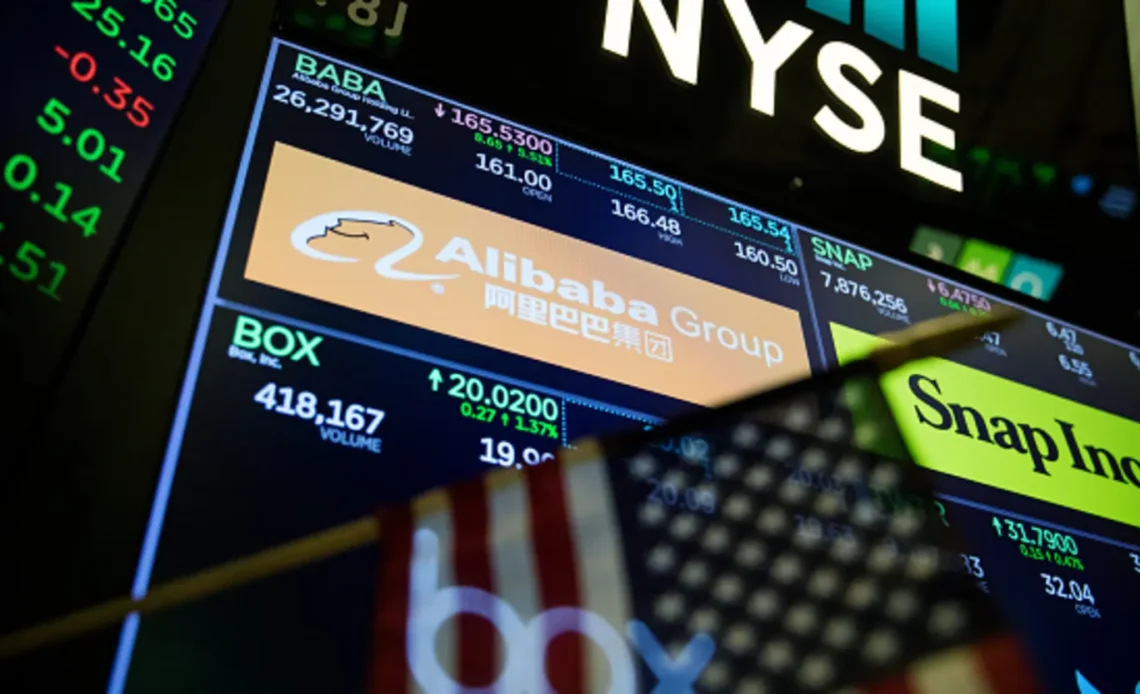
Recent comments from U.S. Treasury Secretary Scott Bessent have reignited concerns on Wall Street about the potential delisting of Chinese stocks from U.S. exchanges. These fears, stemming from Bessent’s remarks earlier this month, reflect growing uncertainty over the future of Chinese companies listed in the United States. The ongoing media and analyst coverage of Bessent’s statement signals the widening scope of concerns regarding U.S.-China financial relations.
Growing Uncertainty in the Markets
Bessent’s comments have become a focal point in discussions about the future of Chinese stocks in the U.S. markets, leading to a surge in uncertainty. While the Treasury Secretary did not directly call for delisting, his remarks have been interpreted as a sign that the U.S. government may increase its scrutiny of Chinese companies’ compliance with U.S. regulatory standards. This has intensified fears among investors that Chinese companies could face forced delisting if they fail to meet these requirements.
The issue has caught the attention of major financial outlets, including the New York Post, which published a related piece examining the implications of the growing tensions between the U.S. and Chinese markets. The broader coverage reflects how the situation is beginning to affect both U.S. investors and Chinese companies that rely on American exchanges for capital.
The Trump “America First Investment Policy”
The backdrop to these concerns is the U.S. President Donald Trump’s “America First Investment Policy” memo, which was published in late February. The memo outlines measures aimed at strengthening U.S. control over financial markets and ensuring that investments align with national interests. A key element of this policy is the push for greater transparency and accountability, particularly from foreign companies listed on U.S. exchanges.
Under this policy, Chinese companies are under particular scrutiny due to the complex relationship between the U.S. and China, especially in the context of trade tensions, national security concerns, and technological rivalry. While the policy’s aim is to protect U.S. investors and national interests, its implementation could lead to increased regulatory pressures on Chinese firms operating in the U.S. financial markets.
The Path Ahead
As fears over Chinese stock delisting intensify, analysts and investors will be closely monitoring any regulatory changes or government actions that could directly impact Chinese companies listed in the U.S. The uncertainty surrounding potential delistings, coupled with broader geopolitical concerns, is likely to keep the markets on edge. For Chinese companies, the risk of delisting could push them to explore alternative markets or consider private capital raising options as they navigate this increasingly complex regulatory landscape.
While the full impact of Bessent’s comments and the “America First” policy remains to be seen, the situation underscores the volatile nature of U.S.-China financial relations and the ongoing tension between the two global powers.
