

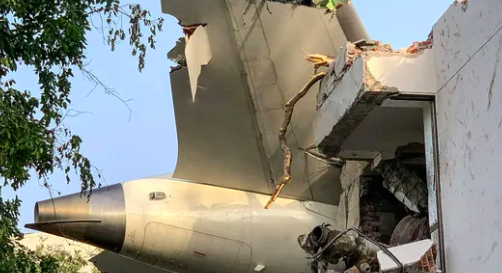
The Air India Express flight 1344 crash occurred on August 7, 2020, in Kozhikode, southern India, resulting in the deaths of 21 people, including both pilots, and injuring over 170. The Boeing 737 overshot the runway in wet conditions during landing, split in two, and prompted investigations by Indian authorities as well as international aviation watchdogs.
Now, [Smith & Partners LLP], a London-based law firm representing the families of several passengers, has issued a public statement questioning the fairness and adequacy of the Indian investigation. In a letter addressed to the Directorate General of Civil Aviation (DGCA), the UK firm listed two main areas of concern:
Potential Conflict of Interest in Investigative Panel
Insufficient Transparency in Evidence Disclosure
Law Firm’s Two “Serious Concerns” Outlined
Potential Conflict of Interest
According to Smith & Partners, “key members” of the crash investigation panel maintain direct relationships with entities that could be responsible for lapses in aviation safety protocols. The letter specifically points out that an investigator has parallel responsibilities in civil aviation safety oversight, prompting worries that “objectivity may be compromised.”
“The integrity of the investigative process depends upon independence from any party that may be subject to blame,” said Alexandra Smith, Partner at Smith & Partners LLP. “Without clear separation, the public cannot have confidence that the investigation’s findings are unbiased or comprehensive.”
Lack of Transparency
The second concern focuses on the apparent lack of full disclosure of critical evidence. The law firm alleges that relatives have been denied access to important data, including cockpit voice and flight data recorder transcripts, technical reports, and preliminary safety audit documents.
“Families are left in the dark, unable to participate meaningfully in the process or understand whether systemic failures have been addressed,” Smith added. “This lack of transparency undermines trust in both domestic and international aviation governance.”
Responses from Indian Authorities and International Stakeholders
Indian Directorate General of Civil Aviation’s Position
The DGCA, India’s civil aviation regulator, has maintained that the official investigation—conducted in accordance with ICAO guidelines—was both “robust and impartial.” Sources within the DGCA have reiterated that “safety improvements have already been implemented,” citing runway upgrades at Kozhikode airport and revised procedures for landing in monsoon conditions.
However, the agency did not directly address the law firm’s latest concerns, instead reiterating its “commitment to full compliance with international standards” in an official statement provided to The Times of India.
International Aviation Community and Legal Developments
The Air Crash Victims’ Families’ Federation International (ACVFFI) has echoed calls for transparency. In a statement this week, ACVFFI President Fernando de Carvalho commended the UK law firm for spotlighting “systemic issues that too often go unaddressed until the next tragedy.”
Amid ongoing civil lawsuits filed by families in Indian and foreign courts, some international experts warn that a lack of transparency could complicate insurance settlements and future air safety regulation.
“Transparency is non-negotiable in aviation accident investigations,” said Professor Harriet Bowen, an aviation safety analyst at the University of Manchester. “Global trust in the safety system is only as strong as its weakest link.”
Background: The Air India Express 1344 Disaster
The Kozhikode crash took place as the flight attempted to land in heavy rain as part of the government’s Vande Bharat Mission repatriation flights during the COVID-19 pandemic. The Boeing 737’s runway overrun led to catastrophic hull loss after the aircraft fell down an embankment. The subsequent probe cited a combination of pilot error, challenging weather, and possible shortcomings in airport infrastructure.
Implications for Air Safety and Victims’ Families
The raising of these “serious” concerns could have widespread ramifications for both the ongoing litigation, potential compensation claims, and India’s standing in the International Civil Aviation Organization (ICAO).
Lawyers representing victims’ families are now seeking an independent international review. Aviation attorneys say such moves could delay settlements and further strain diplomatic relations between India and countries with affected citizens.
Outlook: What Happens Next?
Following the UK law firm’s letter, pressure is likely to grow on the DGCA and Indian authorities to re-examine the case, publish additional evidence, and guarantee independent oversight.
Families and advocacy groups are expected to push for broader reforms in India’s aviation investigation procedures. International regulatory agencies may also initiate audits or offer technical support to ensure future transparency and avoid perceived conflicts of interest.
“Until these concerns are properly addressed, the Kozhikode tragedy will remain a stark reminder of the need for continual vigilance in air safety oversight,” Bowen concluded.
