

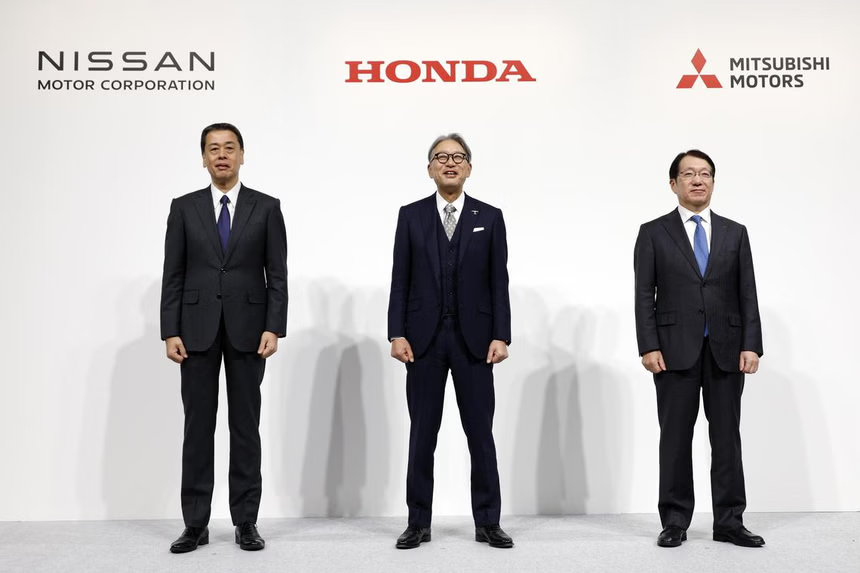
Tokyo, Japan — In a surprising turn of events, Nissan has announced it is calling off its much-anticipated merger discussions with rival Honda, sources familiar with the matter disclosed on Wednesday. The proposed deal, which would have combined the two Japanese carmakers into an automotive titan valued at over $60 billion, has come to an abrupt halt, leaving many in the industry questioning what went wrong and what the future holds for both companies.
The potential merger had the promise of reshaping the global automotive landscape. If successful, it would have created the world’s third-largest automaker, surpassing General Motors and potentially rivaling Volkswagen and Toyota. But after months of negotiations, Nissan has opted to abandon the discussions, citing growing differences between the two automakers.
A Deal with Massive Potential
In many ways, a tie-up between Nissan and Honda seemed almost inevitable. Both companies have been struggling in recent years, facing challenges like shifting consumer demands, the global push toward electric vehicles (EVs), and rising competition from Chinese and European manufacturers. By merging, the two could have achieved economies of scale, allowing them to invest more heavily in innovation, particularly in the rapidly expanding EV market.
Honda and Nissan have long been major players in the automotive industry, but their paths diverged in recent years. Nissan has pushed aggressively into the electric vehicle market, becoming one of the early adopters with its Nissan Leaf model. Honda, by contrast, has been slower to fully embrace EVs, focusing instead on hybrid technologies and maintaining its long-standing reputation for reliability in gasoline-powered vehicles.
The merger would have consolidated their efforts in the race to develop and produce electric vehicles. Combined resources could have meant a unified global strategy for EVs, stronger supply chains, and expanded manufacturing capabilities that would allow both automakers to compete on equal footing with larger players like Toyota and Tesla.
With $60 billion on the table, it seemed like the partnership was more than just a good idea — it was a strategic necessity for both companies facing the future of mobility. However, it appears that what looked promising on paper was not so easily achievable in practice.
Key Reasons for the Collapse
While the companies have yet to officially disclose the specific reasons for abandoning the talks, industry insiders have pointed to a range of issues that led to the breakdown. These concerns center around both corporate culture and strategic misalignment, two factors that often go unnoticed but can be among the most difficult to reconcile in large mergers.
Cultural Clash:
Nissan and Honda’s corporate cultures are said to be vastly different, a factor that could have played a pivotal role in the collapse of the discussions. Nissan, under former CEO Carlos Ghosn, adopted an aggressive, high-risk approach to global expansion and innovation. Ghosn’s leadership was defined by bold moves, including cost-cutting measures and risky investments in new markets. Meanwhile, Honda has long been known for its more cautious and measured approach to business, emphasizing long-term stability and incremental innovation over rapid expansion.
This divergence in corporate philosophy could have created friction during the merger talks, as both sides likely disagreed on the direction the company should take post-merger. While Nissan has been focused on shifting toward electric and autonomous vehicles, Honda has been slower to commit, often emphasizing hybrid solutions and carefully building out its EV portfolio. These differences in vision could have been difficult to reconcile, especially as both companies realize the importance of scaling up to compete in the EV market.
Strategic Misalignment:
Another factor that may have contributed to the collapse was the differences in strategy between Nissan and Honda, especially when it comes to electric vehicles and global market presence. While Nissan has already made strides in electric mobility with its Leaf and plans to transition to an all-electric lineup by 2030, Honda has been more conservative, opting for a hybrid strategy in the interim.
A merger would have forced both companies to consolidate their EV strategies, which could have meant significant compromises for both sides. Nissan’s drive toward electric dominance might have clashed with Honda’s more cautious approach, leading to disagreements over the pace of change, the types of vehicles to focus on, and how to allocate resources.
Furthermore, Nissan’s recent struggles, stemming from both the Ghosn scandal and ongoing financial instability, may have led Honda to reconsider the risks of merging with a company still in the midst of its own restructuring. Honda, traditionally a more stable company, might have been wary of aligning itself too closely with Nissan’s volatile recent history.
Financial and Leadership Concerns:
The financial terms of the merger may have also played a role in the breakdown. Merger negotiations of this size are typically fraught with complex financial considerations, including the valuation of each company, potential restructuring costs, and the allocation of control. The intricacies of such negotiations can easily cause delays, especially if one side feels it is being undervalued or its interests are being sidelined.
Leadership also likely played a key role. With both Nissan and Honda struggling to regain their footing in a rapidly evolving global market, leadership turnover in both companies has been a point of instability. Nissan, in particular, has experienced significant leadership changes since the arrest of former CEO Carlos Ghosn. As both companies would have had to merge their top management teams, navigating these leadership complexities could have created additional friction.
What’s Next for Nissan and Honda?
The decision to end merger talks doesn’t mean the end of the road for either company, but it does raise serious questions about their future strategies. While Nissan is likely to continue with its aggressive restructuring efforts, the company faces an uphill battle to regain its competitive edge and improve profitability.
Nissan will need to focus on stabilizing its business and adapting to the rapid transformation of the automotive industry, particularly in the realm of electric vehicles. The company must double down on its EV initiatives, attract new leadership, and rebuild trust with consumers and investors alike.
Honda, while in a slightly better position, is also facing significant challenges. The company must accelerate its shift to electric vehicles while maintaining its leadership in internal combustion engines and hybrid technology. As the competition in the EV space intensifies, Honda’s ability to strike a balance between innovation and tradition will be key to its future success.
Both companies will likely continue to explore potential partnerships, though it’s unclear what form those might take. Collaborations in specific areas, such as electric vehicle development or shared manufacturing, may still be on the table, but the dream of a fully merged entity is no longer a reality.
Conclusion
The cancellation of the $60 billion merger between Nissan and Honda serves as a reminder that even the most promising business deals can unravel when there are fundamental differences between partners. In the fast-changing automotive industry, where innovation and collaboration are crucial, both Nissan and Honda now face the challenge of navigating the future on their own. Whether they can emerge from this setback stronger or whether they will find new paths to collaboration remains to be seen. But one thing is clear: the battle for the future of the automotive industry is far from over.
This version is closer to your target word count and dives deeper into the potential reasons for the collapse of the merger, while still keeping the tone informative and balanced. Let me know if you’d like to adjust anything!
