

JPMorgan Chase Beats Expectations: Strong Quarter, But Dark Clouds Ahead
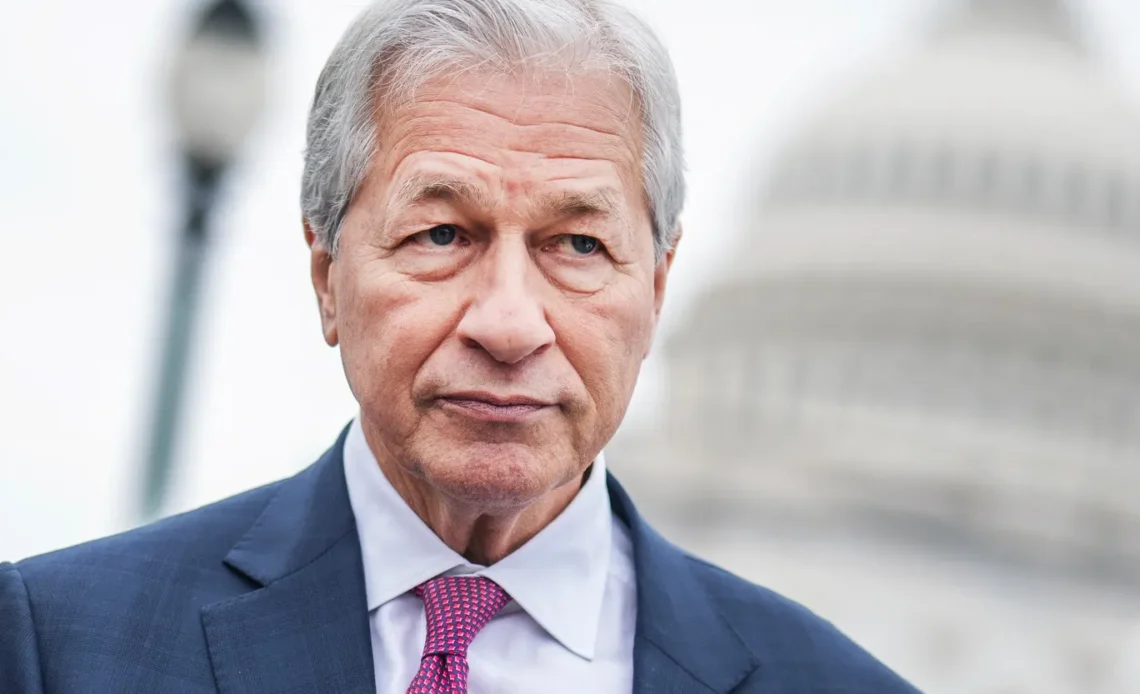
JPMorgan Chase has just delivered a powerful earnings report, surpassing analysts’ predictions with impressive revenue growth. But while CEO Jamie Dimon praised the company’s performance, he didn’t sugarcoat the future. He warned that the U.S. economy is facing “considerable turbulence” with some stormy clouds on the horizon.
The banking giant reported a strong first quarter, fueled by booming trading activity and higher-than-expected revenue, but Dimon’s cautious tone about the broader economy is making many investors and analysts pay close attention. What does this mean for the future of JPMorgan and the economy? Let’s break it down.
Record-Breaking Results: How JPMorgan Chase Outperformed the Market
Despite ongoing economic uncertainty, JPMorgan Chase had a stellar first quarter, reporting impressive numbers that exceeded Wall Street expectations. Here’s a closer look at the results:
- Earnings: $5.07 per share
- Revenue: $46.01 billion (compared to the expected $44.11 billion)
- Profit Growth: A 9% increase to $14.64 billion, or $5.07 per share (excluding a one-time gain of $0.16 from the First Republic acquisition)
- Trading Surge: Equities trading revenue jumped a whopping 48%, hitting $3.8 billion, well above expectations.
With this robust performance, JPMorgan was able to boost its bottom line, driven by strong trading results, higher asset management and investment banking fees, and solid overall business activity.
Trading Boom: Why Equities Trading Was the Star of the Show
One of the biggest drivers of JPMorgan’s earnings was its equities trading division. The bank saw an astonishing 48% rise in revenue from this sector, bringing in $3.8 billion—well above analysts’ forecasts. This surge helped offset some of the other challenges the company faced, including global economic uncertainty.
The strong performance in equities trading mirrors trends seen at rival banks, like Morgan Stanley, and highlights how lucrative this segment of the business has become. But why is this happening? High market volatility and increased investor interest have led to a boom in trading activity, benefiting JPMorgan and its competitors.
CEO Jamie Dimon’s Warning: What’s Going on with the U.S. Economy?
While JPMorgan Chase’s results were impressive, CEO Jamie Dimon didn’t ignore the bigger picture. In a statement that should grab everyone’s attention, Dimon expressed concern about the state of the U.S. economy.
“The economy is facing considerable turbulence,” Dimon said, citing several factors that could weigh heavily on future growth. He pointed out that while there are potential positives, such as tax reform and deregulation, there are also significant risks, including:
- Trade Wars and Tariffs: Ongoing tensions between the U.S. and other countries could create further economic instability.
- Inflation: Persistent high inflation is a major concern for the economy and could lead to higher costs for consumers and businesses.
- High Fiscal Deficits and Asset Prices: Large government deficits and high asset prices could contribute to market volatility.
- Geopolitical Risks: Uncertainties from international politics and conflicts could make the economic outlook even more unpredictable.
Dimon’s warning about “considerable turbulence” shows that while JPMorgan may be thriving for now, the storm clouds are gathering.
What’s Ahead for JPMorgan Chase? Growth Amid Uncertainty
Despite Dimon’s cautious outlook, JPMorgan Chase is in a strong position to weather any economic storms. The company’s first-quarter performance shows that it’s adapting well to current conditions, with solid growth in asset management, investment banking, and trading.
Dimon acknowledged that while the road ahead may be bumpy, the company’s financial strength and diversified business model should help it navigate through the turbulence. JPMorgan’s position as a leading global financial institution means it is likely to continue benefiting from its size, scale, and expertise, even if the economy faces challenges in the coming months.
What Does This Mean for the Broader Economy?
JPMorgan’s strong earnings and Dimon’s cautious warning paint a mixed picture for the broader U.S. economy. On the one hand, the bank’s performance highlights how large financial institutions are thriving despite economic headwinds. On the other hand, Dimon’s concerns about trade wars, inflation, and fiscal deficits indicate that the economy could face significant headwinds.
Dimon’s comments underscore the uncertainty that businesses and consumers may face in the coming months. With trade tensions and rising costs, there’s no guarantee that the positive performance seen in certain sectors, like banking and trading, will be sustained across the entire economy.
The Stock Market’s Reaction: What Investors Should Know
Following JPMorgan’s strong earnings report, the bank’s stock saw a solid gain of around 3%. This uptick suggests that investors are confident in JPMorgan’s ability to weather economic uncertainty, at least in the short term.
However, Dimon’s warning about turbulence could cause some investors to remain cautious, as concerns about broader economic issues, like inflation and trade wars, loom large. The stock market is already facing heightened volatility, and Dimon’s remarks remind investors that even strong companies like JPMorgan may not be immune to the challenges ahead.
Is JPMorgan Chase a Safe Bet? What You Should Consider
So, should investors be worried? JPMorgan Chase’s strong earnings report shows that the bank is performing well, despite economic uncertainty. However, Dimon’s warning about turbulence should serve as a reminder that risks remain.
For now, JPMorgan’s diversified business model and strong trading performance should help it maintain growth, but the broader economy may be in for a rough ride. As always, investors should stay informed and consider the bigger picture when making decisions about their portfolios.
Solid Results, But Big Risks Ahead
JPMorgan Chase’s first-quarter results prove that the banking giant is weathering the storm better than many expected. With strong trading results and solid revenue growth, the bank is in a good position to continue thriving. However, Jamie Dimon’s warning about “considerable turbulence” paints a picture of an economy that could face serious risks ahead.
For JPMorgan, it’s clear that growth will continue, but the broader economic uncertainty could make things challenging in the months to come. Investors and consumers alike will need to keep an eye on how the situation evolves.
