

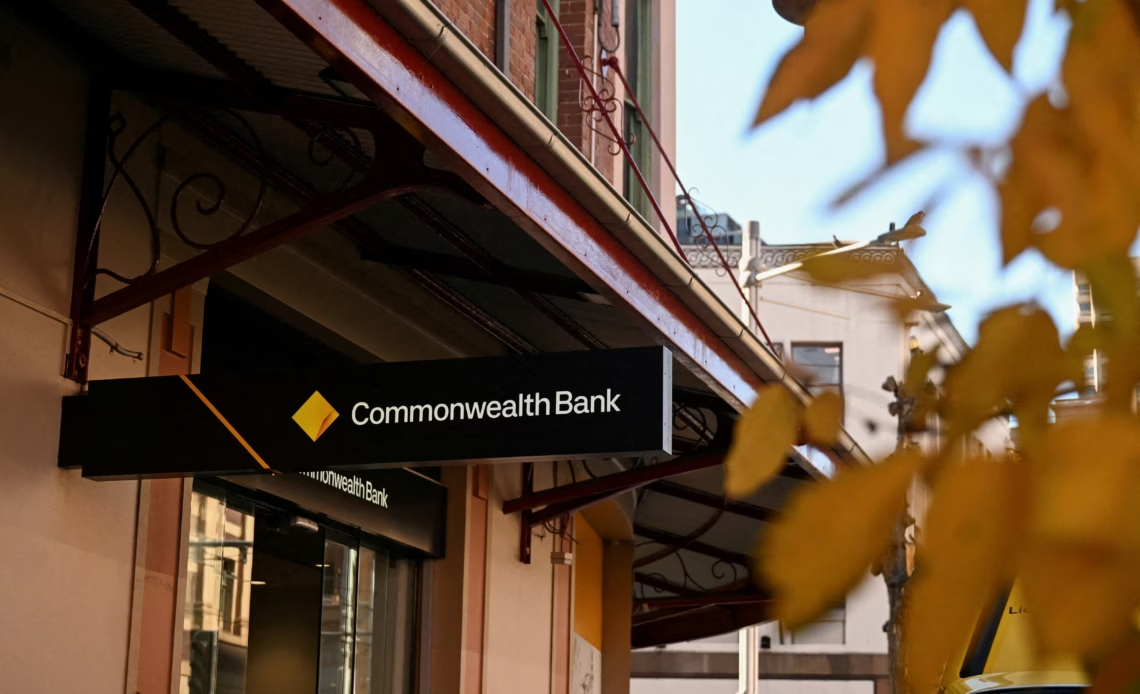
Shares of Australia’s top banks have finally stabilized after a dramatic eight-day sell-off that saw their combined market value drop by more than A$63 billion (about $40 billion). The sharp decline has left investors reeling, but Monday’s pause in the sell-off gives the banks some breathing room. So, what caused this huge dip, and what can investors expect in the coming weeks? Let’s dive into the situation and explore what’s behind this massive financial shake-up.
The Big Drop: What Happened to Australia’s Banks?
A Sharp Decline in Market Value
Australia’s banking sector experienced one of its most challenging weeks in recent history, with a significant drop in share prices that wiped out over A$63 billion ($40 billion) in market value. Over the past eight sessions, the top banks took a massive hit, causing concern among investors and sparking debates about the overall health of the financial sector.
The decline was led by major players like Commonwealth Bank of Australia, Westpac, ANZ, and National Australia Bank (NAB). The combined value of these banks has been on a downward spiral, causing ripples in both the stock market and the broader Australian economy.
Why Did Australia’s Banks Lose $40 Billion?
Global Economic Pressures and Internal Challenges
So, what caused such a drastic drop in the value of Australia’s top banks? There are several factors at play here.
- Global Economic Concerns: The broader global economic environment has been putting pressure on markets worldwide. Inflation concerns, tightening monetary policies, and fears of a global recession have contributed to investor nervousness. These factors also impact banks, as they face higher funding costs and potential credit risks as borrowers struggle with rising interest rates.
- Rising Interest Rates: One of the biggest factors affecting Australian banks is the Reserve Bank of Australia’s decision to raise interest rates. While higher rates generally benefit banks by increasing their profit margins on loans, they can also create challenges. As borrowing costs rise, customers may start to default on their loans, leading to higher credit risks for banks.
- Profit Warnings and Earnings Pressure: In addition to global economic conditions, several of Australia’s banks have been facing pressure on their earnings. With competition in the financial services sector heating up and interest rates rising, banks are grappling with lower profit margins. Some banks also issued profit warnings, signaling a slowdown in their earnings growth. This triggered a wave of sell-offs from concerned investors.
- Investor Sentiment and Speculation: Market sentiment plays a major role in stock prices, and when one or two major banks report bad news or show signs of weakness, it often causes a chain reaction. Speculation about the future of the banking sector, combined with fears of further rate hikes, sent a wave of selling through the market.
Bank Shares Take a Breather
Monday’s Market Pause
After an intense sell-off, Monday brought a moment of calm. Shares of Australia’s major banks stopped their free fall, with some experiencing modest gains or remaining stable. This brief pause in the downward spiral is providing relief to investors, but the question remains—will this rebound last?
It’s important to note that while the banks have regained some ground, their overall market value remains significantly lower than it was just a few weeks ago. Despite Monday’s stabilization, many are asking if this is a temporary breather or the start of a more sustained recovery.
What Does This Mean for Investors?
Key Takeaways for Bank Shareholders
For investors, the recent dip in the market value of Australian banks presents both risks and opportunities. Here are a few key takeaways:
- Short-Term Volatility: The sharp drop in bank shares shows how volatile the market can be. In the short term, investors may face uncertainty as economic conditions evolve. For those looking to make quick profits, the fluctuations in share prices could provide some trading opportunities. However, for long-term investors, this volatility could be more difficult to navigate.
- Opportunities for Bargain Hunters: With shares at a lower price, some investors may see this as an opportunity to buy stocks at a discount. The banking sector remains a key part of the Australian economy, and many experts believe that the current slump could be temporary. Those with a long-term investment horizon might find value in the current prices, particularly if the banks can weather the storm and return to profitability as the global economy stabilizes.
- Interest Rates and Economic Growth: A key consideration for investors is the potential impact of interest rates. While higher rates might help banks increase their profits in the long run, they can also hurt economic growth and increase the risk of loan defaults. Investors need to closely monitor future rate hikes and economic indicators to gauge the future performance of the banking sector.
What’s Next for Australia’s Banks?
A Long Road to Recovery?
So, where do Australia’s banks go from here? While the short-term outlook remains uncertain, several factors could help stabilize the sector.
- Interest Rate Outlook: The Reserve Bank of Australia’s future decisions on interest rates will play a significant role in shaping the outlook for the banks. If the central bank slows down its rate hikes or signals a potential pause, it could relieve some pressure on the banks and help boost investor confidence.
- Economic Stabilization: A stabilization of global economic conditions—particularly in relation to inflation and supply chain issues—could also benefit the Australian banking sector. If the global economy avoids a deep recession and growth resumes, banks could see a rebound in demand for loans and other financial services.
- Strengthening Profitability: Australian banks are known for their strong market position and profitability. While they are currently facing some challenges, they have the resources and capabilities to adapt to changing economic conditions. If they can successfully navigate these challenges and maintain profitability, their stock prices could recover over time.
Conclusion: Is It Time to Buy or Hold?
Bank Shares Offer Mixed Signals
The recent market plunge and subsequent pause in the sell-off of Australian bank shares leave investors with a mixed outlook. While some may view this as an opportunity to buy stocks at a discount, others may prefer to wait until there’s more certainty regarding global economic conditions and interest rate policies.
For long-term investors, the banking sector remains an essential part of the Australian economy. However, given the volatility and current challenges, a cautious approach may be prudent. It’s essential to monitor both domestic economic factors and global trends before making any major investment decisions.
