

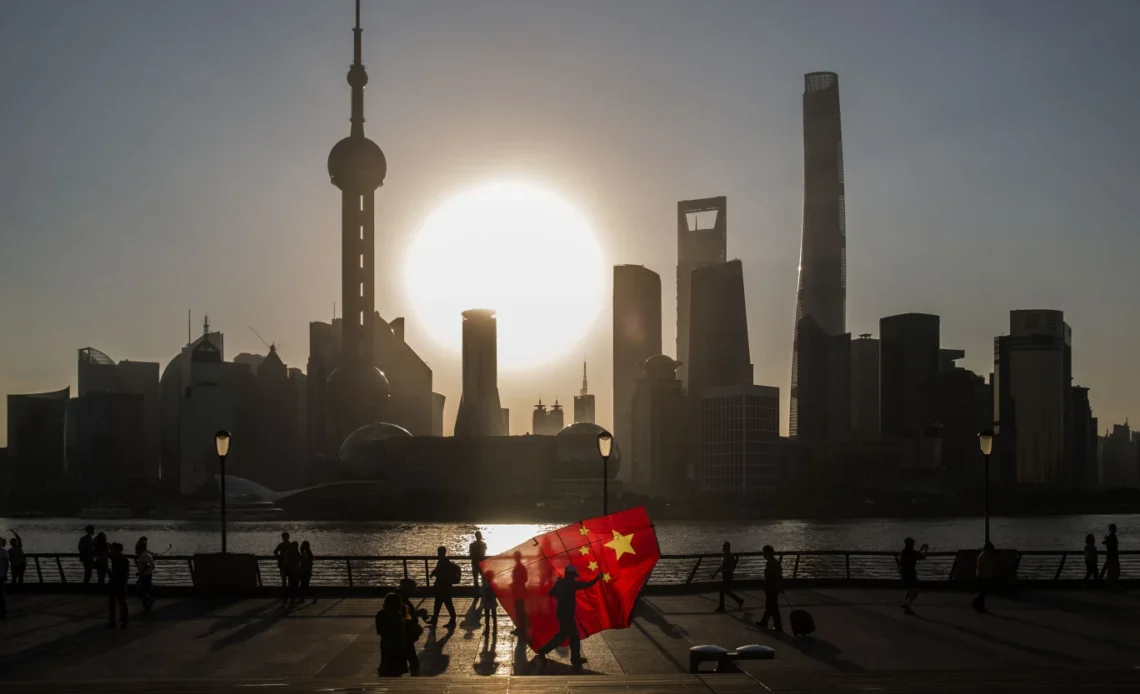
Global trade tensions and economic outlooks were key factors influencing investor decisions across the Asia-Pacific region on Wednesday. With China’s economic targets set for 2025 and concerns about U.S. tariffs, the region’s markets reacted with mostly positive results.
A Mixed Bag for Asia-Pacific Markets
Markets in the Asia-Pacific region had a mostly positive day on Wednesday, despite global concerns about trade tensions and inflation. Investors across the region were closely analyzing China’s economic targets for 2025, as well as the broader economic landscape, which has been affected by growing trade tensions, particularly with the United States.
As we head into the middle of the week, here’s a quick look at how the markets performed across key Asia-Pacific countries:
- Australia’s S&P/ASX 200 saw a dip, falling by 0.70%, closing at 8,141.1. Despite the decline, the country’s economy showed growth in the fourth quarter of 2024, expanding by 1.3% year-on-year, beating the expected growth of 1.2%.
- Japan’s Nikkei 225 saw a slight uptick of 0.23%, closing at 37,418.24, while the Topix index climbed 0.30%, ending the day at 2,718.21.
- South Korea also saw gains, with its Kospi index rising 1.16%, closing at 2,558.13, and the Kosdaq, a smaller index, advancing 1.23% to close at 746.95.
- Hong Kong’s Hang Seng Index had a strong showing, surging by 2.8%, while mainland China’s CSI 300 ended the day with a 0.45% increase, closing at 3,902.57.
This upward trend in markets indicates that investors are generally feeling optimistic about the global economy, despite challenges like U.S. tariffs and other trade-related issues.
China Sets 2025 Growth and Inflation Targets
A key focal point for investors on Wednesday was China’s “Two Sessions” — the annual parliamentary gathering where China sets its key economic targets and policies. The meeting kicked off on Wednesday with China’s National People’s Congress presenting important details about the country’s economic plan for 2025.
One of the biggest announcements was China’s official target for GDP growth, which is set at around 5% for 2025. The country also lowered its inflation expectations, aiming for a target of around 2%.
China’s economic plans are particularly important because of the country’s global influence on trade, and its rapid economic growth has a significant impact on markets worldwide. With China’s GDP growth target set at 5%, the government is signaling that it intends to maintain steady growth, but without risking excessive inflation or other negative economic pressures.
The Impact of U.S. Tariffs on Global Trade
Alongside China’s economic news, there are also concerns about the trade war between the U.S. and China, which could add volatility to the global economy. On Tuesday, U.S. President Donald Trump imposed new tariffs on goods from Mexico and Canada, affecting 25% of goods. He also announced an additional 10% duty on Chinese goods, which brings the total new tariffs on China to 20%.
These tariff increases are raising concerns about how global trade will be affected. With tariffs already in place for several countries, including China, investors are closely monitoring the situation to gauge the long-term effects of these trade policies.
The decision to impose these tariffs on goods from Mexico, Canada, and China has led to mixed reactions in global markets. Traders and investors are particularly worried that further escalation of trade tensions will cause market uncertainty, which may weigh on investor sentiment.
Australia’s Economic Outlook: Strong Growth Amid Global Tensions
Despite a slight drop in its market on Wednesday, Australia’s economic performance has been strong in recent months. Australia’s economy grew by 1.3% year-on-year in the fourth quarter of 2024, exceeding economists’ expectations of 1.2%. While the S&P/ASX 200 index experienced a fall of 0.70%, it’s important to note that the growth figures suggest that the economy is resilient despite global trade tensions.
Australia’s economic performance contrasts with the trade pressures coming from the United States, especially regarding China. As Australia has significant trade ties with China, the country’s economy could be impacted by the broader global trade uncertainty. Still, the positive economic growth numbers suggest that Australia’s economy may remain on solid footing.
What’s Next for Global Markets?
As the Asia-Pacific region continues to navigate global economic challenges, investors are keeping a close eye on several factors:
- China’s GDP growth and inflation targets, which will guide the country’s future economic policies.
- U.S. tariffs and their impact on global trade.
- Market sentiment as countries deal with economic uncertainties stemming from inflation, trade tensions, and rising tariffs.
Despite concerns over global trade and inflation risks, the Asia-Pacific markets have largely been resilient, with many showing gains. Investors will likely continue to monitor China’s economic direction and U.S. trade policies closely as they evaluate future opportunities in this uncertain global economic environment.
The Asia-Pacific stock markets displayed mostly positive movement on Wednesday, with investors digesting China’s economic targets and global trade tensions. While Australia’s S&P/ASX 200 saw a slight decline, many other markets, including Japan and Hong Kong, experienced gains. With China’s GDP growth and inflation targets now clear, and U.S. tariffs looming, the next few weeks will likely be a crucial period for market performance across the region.
