


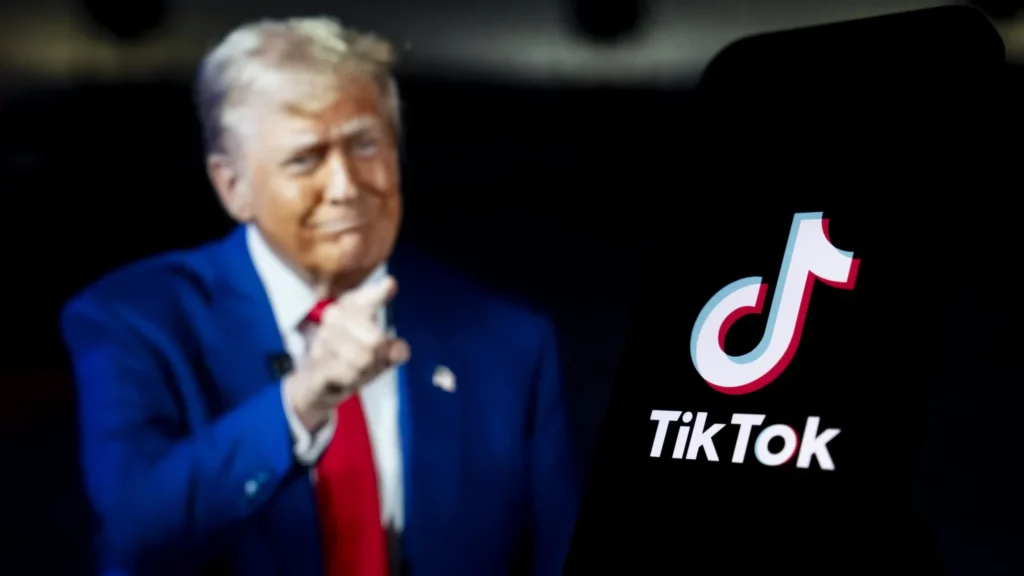
In a surprising twist to the ongoing saga between the U.S. and TikTok, former President Donald Trump recently suggested he might lower tariffs on China to help finalize a deal that would involve ByteDance, the Chinese company behind TikTok, selling its U.S. operations. But what does this mean for TikTok users, businesses, and the broader U.S.-China trade war? Let’s break it down in simple terms.
What’s Going on with TikTok and China?
TikTok, the popular short-video app, has been at the center of controversy for years. In 2020, the Trump administration raised concerns over national security, arguing that the app could be used to spy on American citizens due to its Chinese ownership. This sparked a series of moves to potentially ban the app in the U.S. and force ByteDance to sell TikTok’s American operations to a U.S.-based company.
However, the situation is far from settled, and now Trump is floating the idea of lowering tariffs on China to speed up a resolution to the TikTok deal.
Trump’s Latest Statement on Tariffs and TikTok
In a recent interview, Trump remarked, “Maybe I’ll give them a little reduction in tariffs or something to get it done.” He was referring to the ongoing negotiations over TikTok’s future in the United States. Trump continued by saying that TikTok, despite its massive popularity, was less important than tariffs, adding, “Every point in tariffs is worth more than TikTok.”
This comment comes after TikTok’s future in the U.S. has been hanging in the balance for years. While Trump’s suggestion of lowering tariffs may seem like a bold move, it also opens the door to a potential resolution for both the U.S. government and ByteDance.
What Are Tariffs and Why Do They Matter?
To understand Trump’s comment fully, let’s first talk about tariffs. Tariffs are essentially taxes placed on goods imported from other countries. In recent years, the U.S. and China have been locked in a trade war, where both sides imposed tariffs on each other’s goods in an attempt to pressure the other into making trade concessions.
Trump has been a staunch advocate of using tariffs as a negotiating tool. By saying he might reduce them to help close the TikTok deal, he’s hinting that he’s willing to make a trade-off: lower tariffs in exchange for ByteDance completing the sale of TikTok’s U.S. operations.
Could Trump Really Cut Tariffs for TikTok?
While Trump’s suggestion is intriguing, it’s unclear whether this will happen in reality. Cutting tariffs would be a significant move, and it’s unlikely that it will happen without significant negotiation. Lowering tariffs could be seen as a way to smooth relations with China, but it could also upset U.S. businesses and workers who have been affected by the trade war.
Furthermore, there’s the question of whether ByteDance will actually go through with selling TikTok’s U.S. operations. While Trump’s comments suggest progress, the situation is still fluid, and no official deal has been made yet.
Why Does the TikTok Deal Matter?
The potential sale of TikTok’s U.S. operations is critical for a number of reasons. First, TikTok is a massively popular app, especially among younger audiences. Its user base in the U.S. is vast, with millions of people spending hours watching and creating videos every day.
Second, TikTok’s future in the U.S. could have broader implications for the global tech industry. The outcome of the TikTok deal could set a precedent for how the U.S. government handles foreign-owned apps and the ongoing tech competition between the U.S. and China.
Finally, there’s the issue of national security. Trump has long argued that TikTok could be used to gather data on U.S. citizens, potentially compromising American security. The solution, in his view, might be to have TikTok’s U.S. operations sold to a company with no ties to China.
What Could Happen Next?
With Trump’s statement about tariffs and TikTok, the ball is now in ByteDance’s court. Will they agree to sell TikTok’s U.S. operations to a U.S. company? And if they do, will Trump actually follow through on his suggestion to lower tariffs? It’s anyone’s guess.
However, one thing is clear: The relationship between the U.S. and China is more complicated than ever, and TikTok is just one piece of a much bigger puzzle.
Will Trump Extend the TikTok Deadline Again?
In addition to his comments about tariffs, Trump also hinted that the deadline for the TikTok deal might be extended once again. This wouldn’t be the first time the deadline has been pushed back, as negotiations between ByteDance, the U.S. government, and potential buyers have dragged on for years.
The possibility of another extension could mean that the TikTok deal remains in limbo for a little while longer, leaving users and businesses uncertain about what the future holds.
Why Should You Care About the TikTok Deal?
Even if you’re not a fan of politics or international trade, the outcome of the TikTok deal could affect you. Here’s why:
- TikTok’s Popularity: If TikTok is banned or its operations in the U.S. are shut down, millions of people will lose access to the app. This could have a massive impact on influencers, brands, and content creators who rely on TikTok for their business and income.
- National Security: If you’re concerned about data privacy, the TikTok deal could shape how foreign apps are treated in the future. If TikTok is sold to a U.S. company, it may help alleviate security concerns about Chinese data practices.
- Global Tech Landscape: The TikTok deal could be a turning point in how the U.S. approaches technology companies from other countries. If the deal goes through, it could change the way future app deals are handled.
Final Thoughts: What Does It All Mean?
The TikTok saga is far from over, and Trump’s latest comments about lowering tariffs to facilitate a deal are just the latest twist in this complex story. While it remains to be seen whether the U.S. government and ByteDance will reach a deal, one thing is clear: The stakes are high, both for the future of TikTok and for the broader U.S.-China relationship.