


A Bold Move in the World’s Largest Auto Market
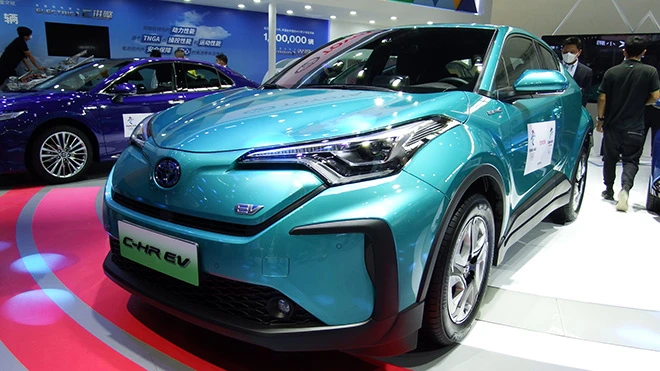
In an effort to regain its footing in China, the world’s largest auto market, Toyota has launched its most affordable smart electric vehicle (EV) yet, priced at just $20,000. This move comes as part of the Japanese automaker’s strategy to better compete with its Chinese rivals, particularly the EV giant BYD. With this launch, Toyota is hoping to attract budget-conscious buyers looking for high-tech features without breaking the bank.
The new model, named Bozhi 3X, marks a significant step forward for Toyota in the EV market, which has seen fierce competition, especially from local players offering low-cost, feature-packed vehicles.
Toyota’s New EV Strategy: Affordable Yet Advanced
The Bozhi 3X is designed to be Toyota’s most affordable EV model in China, yet it doesn’t skimp on advanced features. The car comes with high-tech features such as a smart driving system similar to Tesla’s, featuring an Orin X chip, lidar, and Momenta’s smart driving software. These features are becoming increasingly important in the competitive EV market, where Chinese manufacturers are already offering similar tech, often at a lower price point.
Toyota’s aim is to draw customers with a low starting price of 139,800 yuan (roughly $19,300), while a less advanced version will cost 104,800 yuan. This makes it Toyota’s cheapest EV available in China, a price that’s significantly lower than many of its other models in the market.
Early Success: 10,000 Orders in One Hour
The response to the Bozhi 3X launch has been overwhelmingly positive. Peng Baolin, Vice President of Sales at GAC Toyota, shared on Weibo that over 10,000 orders were placed within the first hour of the car’s launch, signaling strong interest among Chinese consumers. This fast-paced demand highlights the growing appeal of affordable, tech-packed EVs in the highly competitive Chinese market.
The Bozhi 3X is part of a broader effort by Toyota and its Chinese partner, Guangzhou Automobile Group (GAC), to capture more of the rapidly expanding EV market. However, Toyota’s success in China has been somewhat limited with previous electric models, so the Bozhi 3X represents a fresh attempt to break through.
Toyota’s China Struggles and the Challenge Ahead
While Toyota has seen some success with its hybrid vehicles, its electric models have faced significant challenges in China. The market is dominated by local players, particularly BYD, which has made great strides in EV development. BYD has offered affordable electric cars with similar features, often at much lower prices. Moreover, BYD recently announced that it would provide advanced driving assistance features for several models priced under $10,000, pushing the competition to new heights.
This new phase of the EV price war in China is only expected to heat up, with more manufacturers competing for market share by offering more advanced features at lower prices. Toyota’s entry with the Bozhi 3X comes at a crucial time, as it seeks to carve out a niche among budget-conscious Chinese consumers who are demanding both low prices and advanced technology.
A Step Towards More Affordable EVs
The launch of the Bozhi 3X marks a turning point in Toyota’s approach to the EV market. Previously, the automaker’s EV offerings in China were seen as more expensive than local options. Now, with its new low-cost model, Toyota is aiming to attract a wider audience, offering a car that features sophisticated technology without the high price tag.
The vehicle’s tech-heavy features, such as the Orin X chip and lidar, are typically found in more premium cars, making the Bozhi 3X a standout in the affordable EV category. However, the real question is whether Toyota can continue to innovate while keeping the costs low enough to stay competitive against local giants like BYD.
The Price War and Toyota’s Next Move
The price war in China’s EV market is expected to continue intensifying. The competition is fierce, with companies such as BYD offering low-cost cars with high-end technology. Additionally, other global automakers like Tesla are also slashing prices in an attempt to dominate the Chinese market.
Toyota’s decision to enter this price-sensitive market with an affordable yet advanced vehicle shows the company’s understanding of the evolving consumer needs. The Bozhi 3X could be just the beginning of Toyota’s efforts to capture a larger slice of the Chinese market, but its success will depend largely on how it continues to evolve in a fast-paced and ever-changing industry.
Will the Bozhi 3X Succeed in China?
The future of the Bozhi 3X and Toyota’s ambitions in China will hinge on several factors:
- Pricing and Competition: While Toyota’s price point is attractive, the competitive pressure from local brands like BYD will be a constant challenge. The Chinese market values affordable and feature-packed cars, and Toyota must maintain a balance between cost and innovation to stay competitive.
- Consumer Sentiment: Early orders have been promising, but long-term success will depend on consumer experiences and the car’s performance in the market. Toyota’s ability to deliver on the promise of advanced features will be key to retaining customer interest.
- Brand Strength: Toyota has a strong brand, but it will need to work harder to differentiate itself in China’s crowded EV market. The company’s focus on tech and affordability may give it an edge, but it will need to keep pace with local competitors’ innovations.
Toyota’s Smart Move to Reclaim Market Share
Toyota’s $20,000 Bozhi 3X EV launch in China is a bold attempt to regain market share in the world’s largest and most competitive EV market. With its smart driving features and low price, the Bozhi 3X is positioned to attract budget-conscious consumers in China who are looking for a high-tech, affordable electric vehicle.
While the market is already flooded with local competitors like BYD, Toyota’s entry into this price war demonstrates its commitment to staying relevant in the fast-changing EV landscape. The real test for Toyota will be whether it can sustain demand and fend off competition from local giants in the months and years to come.
As the race to dominate China’s EV market heats up, all eyes will be on Toyota and how it navigates this new chapter in the EV revolution.