


The Biggest Climate Summit of the Decade Just Started — And the U.S. Is Missing in Action
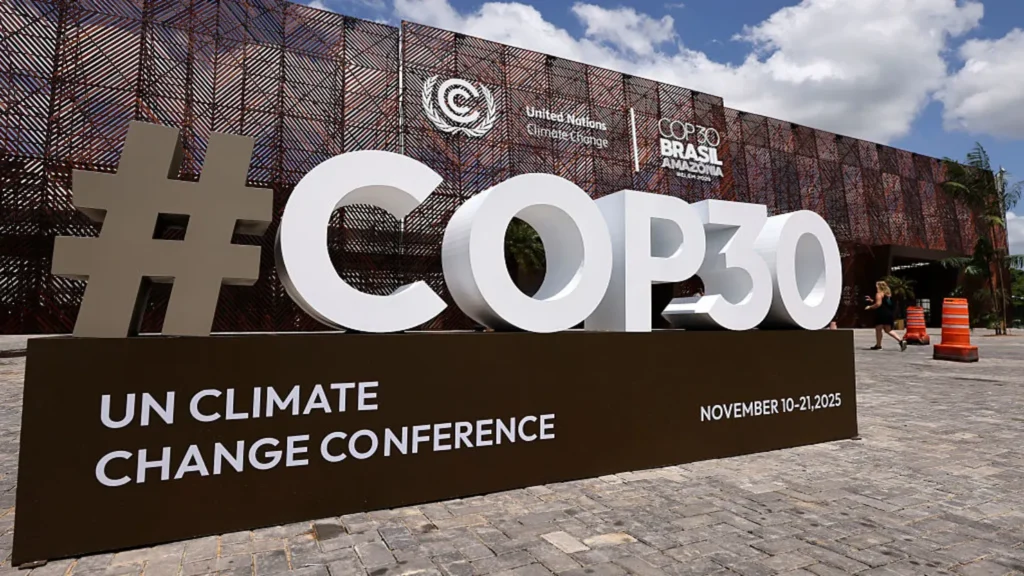
The world’s eyes are on Belem, Brazil, where the most crucial climate summit in history — COP30 — has officially begun. Nearly every nation on Earth has sent its top officials to the edge of the Amazon rainforest to confront the spiraling climate crisis.
But there’s one glaring empty seat at the table — the United States.
In a move that has stunned diplomats, the Trump administration has decided not to send a single senior representative to the U.N. climate talks. It’s the first time ever that the world’s largest economy and one of its biggest polluters has walked away from a major global climate summit.
For environmental leaders, it feels like trying to save the world with one of the key players missing.
A Climate Emergency Meets Political Reality
COP30 couldn’t come at a more urgent moment. The planet is burning, flooding, and melting at record speed. From catastrophic wildfires in Europe to devastating floods in Asia and Africa, the signs of a collapsing climate system are everywhere.
Yet the world’s political leaders seem more divided than ever. Wars, trade conflicts, and populist politics have pushed climate change off the front page — even as scientists warn we’re running out of time to act.
Belem, perched on the gateway to the Amazon rainforest, is a hauntingly symbolic backdrop. The Amazon — often called “the lungs of the planet” — continues to shrink under relentless deforestation, threatening to tip the entire global climate system past the point of no return.
Trump’s Absence Sends Shockwaves Through the Summit
While leaders from more than 190 countries arrived in Brazil over the weekend, the U.S. delegation was nowhere to be found. The Trump administration confirmed that it would not be sending any high-ranking officials — a decision that stunned allies and enraged environmental groups.
“This is the first major climate summit in decades where the United States has chosen silence,” one European diplomat said. “And silence, right now, is deadly.”
Some analysts say it’s better this way — that Trump’s team might have slowed progress. Others warn that without American leadership, global cooperation could splinter, leaving developing countries without the funding and technology they desperately need.
Anna Aberg of Chatham House summed it up bluntly: “The world can’t afford for the U.S. to sit this one out.”
Who’s Stepping Up to Fill the Void?
With Washington on the sidelines, other nations are racing to fill the leadership gap.
Brazil, as host nation, is stepping into the spotlight. President Luiz Inácio Lula da Silva has vowed to protect the Amazon and make climate action central to Brazil’s global agenda. The summit’s location deep in the rainforest is a clear message: the Amazon’s survival is non-negotiable.
Meanwhile, the European Union is pushing for stricter global emissions targets and fresh commitments from major economies. China, too, is positioning itself as a pragmatic player — balancing its reliance on coal with record-breaking investments in solar and wind power.
For smaller nations, especially those already devastated by rising seas and extreme weather, the stakes couldn’t be higher. Their message is simple: act now or watch entire regions disappear.
The U.S. Walks Away as the World Confronts a Breaking Point
Trump’s decision to sit out COP30 has fueled speculation about America’s long-term role in climate diplomacy. Critics say it’s a dangerous sign that the administration is retreating from global cooperation — at the very moment the planet needs unity the most.
For climate scientists, the data couldn’t be clearer: the world is dangerously close to breaching the 1.5°C warming limit set by the Paris Agreement. Once that line is crossed, the effects — from unstoppable sea level rise to irreversible ecosystem collapse — could reshape life as we know it.
But with global politics shifting and major powers distracted by other crises, the sense of urgency is slipping away.
The Amazon Holds the Future in Its Hands
Belem, surrounded by rivers and rainforest, feels like both a warning and a hope. The Amazon is one of the Earth’s greatest natural defenses against climate change — yet deforestation and illegal mining continue to eat away at it daily.
For Brazil, hosting COP30 is more than just symbolism. It’s a chance to rally the world around a new vision: one where protecting nature is seen not as a burden, but as the foundation of economic and social stability.
“We can’t talk about the future without talking about the Amazon,” said one Brazilian official. “What happens here will define the world’s climate for generations.”
Can the World Save Itself Without the U.S.?
That’s the question haunting delegates in Belem. Without America at the table, can the rest of the world still come together to turn promises into action?
Some say yes — that this is a chance for Europe, Latin America, and Asia to take the lead and prove that climate progress doesn’t depend on Washington. Others fear that without the U.S.’s financial muscle and political influence, real change may remain out of reach.
Either way, the message from the Amazon is clear: time is running out.
The Bottom Line
COP30 was supposed to be a turning point for the planet — a moment of unity in the face of crisis. Instead, it’s beginning under the shadow of division and denial.
Trump’s no-show may define this summit as much as any breakthrough agreement. It’s a symbol of a fractured world struggling to come together just as the planet’s clock ticks down.