


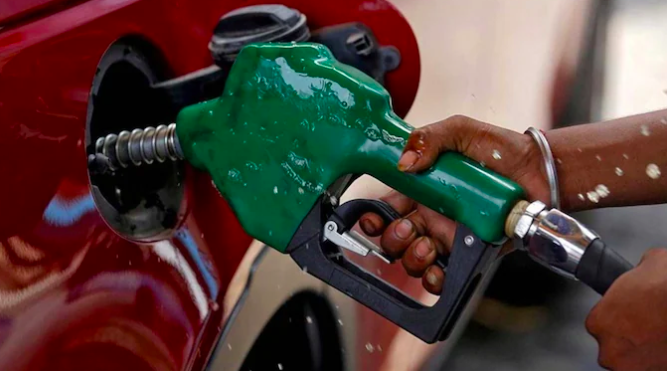
As India moves forward with its ambitious green fuel plans, the launch of E20 fuel—80% petrol and 20% ethanol—has been highlighted as a milestone moment. The government says the use of E20 is a move toward clean energy, less oil import bill, and higher income for farmers. But on the ground, there is a different picture unfolding—particularly for users of old cars.
What is E20 and Why is it Significant?
The E20 launch is under India’s Ethanol Blending Programme (EBP) to lower the carbon footprint and import dependence of the country. Ethanol, a biofuel which is generally made from sugarcane, molasses, and excess grains, is a renewable fuel which burns cleaner compared to petrol. Mixing it with petrol lowers the emission of greenhouse gases and is likely to save India ₹35,000 crore every year in oil imports.
From economic and climate perspectives, the switch appears to be a win-win situation.
But “no side effects,” as the government has indicated, may be too simplistic an assumption—particularly when the country’s enormous inventory of aged two-wheelers and automobiles are taken into account.
The Official Claim: E20 Is Safe for All
Government departments and union ministers have ensured that E20 fuel is generally safe. In their view, contemporary engines have been specifically engineered with ethanol compatibility, and the cleaner-burning fuel reduces carbon monoxide and hydrocarbon emissions.
But there is a significant difference: E20 is safe for E20-designed vehicles. The issue is with pre-2020 or non-E20 compliant vehicles, and these account for a massive chunk of the Indian car ecosystem.
So, What is the Effect When Older Cars Use E20?
Experts advise that employing E20 in older, non-compatible cars could cause a series of long-term problems:
Decrease in Gas Efficiency
Ethanol is less energy-dense than petrol. When you fill up E20 in an incompatible engine, the car has to consume more fuel to develop the same power, resulting in a 5–10% reduction in mileage. For price-sensitive Indian consumers, this translates straight into the pocket.
Corrosion and Engine Wear
Ethanol is water-attracting. When E20 is utilized in engines that are not suited for it, additional moisture can result in corrosion of fuel tanks, pipelines, and injectors. Rubber parts and gaskets could wear more quickly, and maintenance requirements would be higher.
Cold Start Issues
Ethanol evaporates at a different rate than petrol. In cold climates or early morning, this may result in starting problems for older engines, with resulting hard starts or misfires.
Increased Maintenance Expenses
Incompatible vehicles may need more frequent maintenance, such as fuel system clean-out, spark plug replacement, and gasket changes. This over several years constitutes a higher overall cost of ownership.
Carmakers Already on Board
True, large Indian automakers like Maruti Suzuki, Honda, Hyundai, and Bajaj Auto have been developing E20-compatible cars since 2021. And indeed, the majority of cars made after April 2023 are E20-approved.
But what about the millions of cars already present on Indian roads?
As per government statistics, more than 200 million two-wheelers and automobiles had been sold in India prior to the ethanol blending policy implementation. It may not be feasible to expect all of them to seamlessly switch to E20.
What Automakers and Mechanics Say
Independent garages and OEM service outlets throughout India have seen a perceptible increase in customer inquiries about E20 fuel. A few car owners have reported rough idling, lower throttle response, and even clogged fuel injectors—all after refilling with E20.
A senior engineer at a leading OEM spoke on condition of anonymity,
“We’ve tested E20 in controlled environments, but real-world conditions—especially in rural and high-humidity zones—can amplify issues in older engines. Long-term exposure to ethanol-blended fuel in non-compliant engines isn’t ideal.”
The Government’s Response
In recent statements, officials have acknowledged the concerns but maintain that the fuel is safe when used “in the right vehicles.” They’ve also encouraged retrofitting and phasing out older vehicles.
To help consumers, fuel pumps now have stamps for E10 and E20 blends, and carmakers must mark fuel caps in an unambiguous manner on biofuel-compliant vehicles. Education and awareness are still constrained, particularly in Tier 2 and Tier 3 cities.
India’s shift towards biofuels is unavoidable and imperative but cannot be frictionless unless consumer education, technical assistance, and infrastructure upgradation occur simultaneously.
Here’s what can alleviate the transition:
Clear petrol station labeling regarding fuel blend levels.
Subsidies or incentives for retrofitting cars.
Fuel compatibility awareness campaigns.
A strong vehicle retirement or buyback program for high-emission vehicles.
The promise of E20 is real—lower emissions, reduced oil dependency, and farmer income generation. But dismissing the potential side effects for older vehicles isn’t just misleading—it’s dangerous.
While E20 might be a charm to new models, millions of existing vehicles in India can face performance loss, engine depreciation, and additional long-term expenses.
The government’s optimism is noble, but the reality is more nuanced. As long as older cars are not upgraded or phased out, E20 will be a double-edged sword—one that pits green ambitions against consumer reality.