


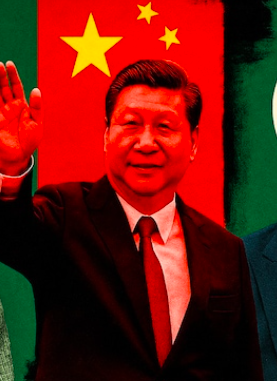
Officials from all three nations confirmed over the weekend that high-level negotiations concluded successfully, resulting in an agreement to establish the “China-Pakistan-Bangladesh Economic and Strategic Partnership” (CPB-ESP). Details of the agreement, shared via a joint communique, highlight commitments to enhance cross-border trade, launch collaborative infrastructure projects, and facilitate dialogues on security and environmental issues.
“We are entering a new era of regional cooperation,” China’s Foreign Ministry spokesperson, Wang Wenbin, stated on Sunday. “This partnership will not only foster economic prosperity among our countries but also contribute to peace and stability in Asia.”
Economic Integration Drives Initiative
The primary focus of the new bloc is economic integration. The agreement proposes a framework for easing trade barriers, harmonizing customs procedures, and boosting investments.
Trade Expansion: Collective bilateral trade among the trio currently stands at around $47 billion annually, according to 2023 statistics from the Asian Development Bank. The bloc aims to increase this figure by 30% within five years by facilitating joint trade missions and lowering tariffs.
Infrastructure Development: Drawing on China’s extensive Belt and Road Initiative (BRI) experience, new road, rail, and port projects spanning from western China through Pakistan to Bangladesh’s eastern coast are under discussion. These projects aim to transform regional logistics and supply chains.
“Connectivity is the backbone of any regional partnership,” said Dr. Hasan Mahmud, Bangladesh’s Minister for Planning. “Together, we can unlock immense opportunities for our people and create new markets.”
Strategic and Security Cooperation
Besides economics, the CPB-ESP envisions deeper cooperation on regional security challenges, including counterterrorism and transnational crime. Sources close to Pakistan’s Ministry of Foreign Affairs indicate that military-to-military dialogues and intelligence-sharing forums are planned.
“Security in our region is indivisible,” said Pakistani Foreign Secretary Asad Majeed Khan. “We must work hand in hand to address common threats and ensure peace for our peoples.”
A Challenge to Existing Alliances?
The announcement arrives at a time of shifting regional alignments. While China and Pakistan have long maintained close strategic ties—exemplified by the China–Pakistan Economic Corridor—Bangladesh’s participation is seen as a notable development. Historically, Bangladesh has balanced its relations with both Asian powers and Western partners, including India and the United States.
Experts suggest the new bloc could act as a counterweight to regional entities such as the South Asian Association for Regional Cooperation (SAARC) and the Quadrilateral Security Dialogue (QSD, or Quad), which comprises the US, India, Japan, and Australia.
“Bangladesh joining forces with Pakistan and China signifies a maturing foreign policy vision,” said Dr. Michael Kugelman, director of the South Asia Institute at the Wilson Center. “It also presents a challenge for India, as the country reassesses its diplomatic and economic strategies.”
India’s Response
So far, India has not issued an official statement. However, research analysts believe New Delhi will monitor the bloc’s activities closely, especially regarding projects in the Bay of Bengal and regional security coordination.
Regional and Global Reactions
Support and Skepticism
The United Nations Asian and Pacific Center for Shared Development welcomed the announcement, stating it could contribute to regional sustainability and poverty reduction. However, critics point to geopolitical risks, noting how deeper China-Pakistan-Bangladesh cooperation could aggravate longstanding rivalries and economic dependencies.
Rahima Begum, an economist at BRAC University, commented, “While increased collaboration can spur growth, it’s vital that the bloc upholds transparency and ensures smaller partners are not overshadowed economically or politically.”
Potential Impact on Trade, Investment, and Security
Economy: Experts anticipate an upsurge in foreign direct investment, technology transfer, and job creation across all three nations.
Infrastructure: New transport corridors could lower regional shipping costs by up to 15%, according to forecasts by the Asian Infrastructure Investment Bank.
Security: Shared intelligence operations are expected to curb militancy and stabilize border areas.
What Comes Next?
The founding summit for the CPB-ESP will take place in Beijing on June 25, 2024, with heads of government from each country expected to attend. Initial agreements on trade, infrastructure, and defense cooperation will be formally signed, with joint working groups set up for implementation.
Observers note that the bloc’s viability will depend on follow-through, political will, and the ability to navigate existing regional tensions.