


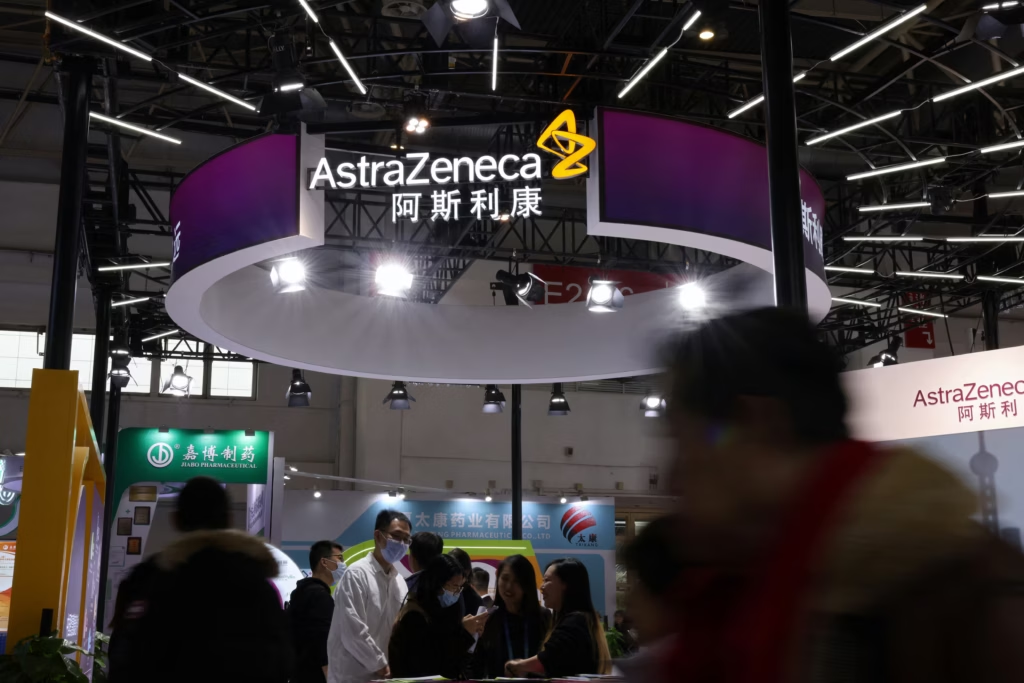
AstraZeneca’s Major Investment in Beijing
In a bold move signaling its long-term commitment to China, British pharmaceutical giant AstraZeneca has announced it will invest a substantial $2.5 billion in a new research and development center in Beijing. This investment comes just months after the company faced scrutiny from Chinese regulators over its import duties. But instead of backing down, AstraZeneca is pushing forward, doubling down on its presence in China, and focusing on innovation and global growth.
AstraZeneca’s Big Bet on China’s Future
The new R&D hub in Beijing marks a major milestone for AstraZeneca as it seeks to strengthen its position in the Asian market. As part of the deal, the company will collaborate with leading Chinese biotech firms, Harbour BioMed and Syneron Bio, and launch a joint venture with BioKangtai to develop and market vaccines for respiratory and infectious diseases.
The investment isn’t just about expanding AstraZeneca’s footprint in Beijing—it’s also about creating jobs and fostering innovation. With the new R&D center, AstraZeneca plans to increase its Beijing workforce to about 1,700 employees. This hub will become the company’s second such center in China, following a similar facility in Shanghai.
The Beijing Investment: What Does it Mean for AstraZeneca?
This $2.5 billion investment comes with strong local backing. AstraZeneca’s new research center is a partnership with Beijing’s Municipal Government and the Beijing Economic-Technological Development Area Administrative Office. This collaboration will help the pharmaceutical giant tap into the growing opportunities in China’s health and biotech sectors.
According to AstraZeneca’s CEO, Pascal Soriot, the Beijing hub will become a key part of the company’s global strategy to bring cutting-edge medicines to patients worldwide. He said, “The center will partner with the cutting-edge biology and AI science in Beijing and be a critical part of our global efforts.” This reflects AstraZeneca’s determination to push forward in China, one of the world’s largest and most dynamic pharmaceutical markets.
A Joint Venture with BioKangtai: New Vaccine Manufacturing Facility
As part of this exciting venture, AstraZeneca will team up with BioKangtai, a Chinese biopharmaceutical company, to develop, produce, and market vaccines. This collaboration will lead to the opening of AstraZeneca’s first vaccine manufacturing facility in China. The new plant will help AstraZeneca scale up its vaccine production, including potential vaccines for respiratory diseases and other infectious illnesses.
AstraZeneca’s Long-Term Focus on Innovation
Despite facing challenges in the region, including the Chinese tax probe, AstraZeneca remains committed to its global strategy. CEO Pascal Soriot emphasized that while China plays an important role in future innovation, AstraZeneca has no plans to scale back its efforts in other markets, particularly the United States.
“We are very committed to the United States. We have two very large research and development centers there,” Soriot told CNBC, pointing out that the U.S. remains a key part of their overall global strategy. AstraZeneca’s decision to keep a balanced focus on both the U.S. and China reflects a smart strategy in an era of shifting global trade dynamics.
What Does This Mean for AstraZeneca Shareholders?
While the announcement was met with general approval of AstraZeneca’s forward-looking plans, the company’s stock price dropped slightly by 0.9% at 12:28 a.m. London time. This drop could reflect broader market uncertainty and investor concerns over international trade issues, including the ongoing tensions between China and the U.S.
Despite this, AstraZeneca’s investment in China is seen as a long-term play aimed at securing its position in one of the world’s most important markets for healthcare and biotechnology innovation.
AstraZeneca’s Global Strategy Takes Shape
AstraZeneca’s decision to invest $2.5 billion in a new research and development center in Beijing signals its confidence in China’s future as a hub for medical innovation. By forming new partnerships with biotech firms and launching a vaccine manufacturing facility in China, the company is positioning itself for success in the global pharmaceutical industry.
This bold move reflects AstraZeneca’s unwavering commitment to growing its presence in Asia while continuing to maintain a strong focus on its operations in the U.S. and other key markets. As the pharmaceutical giant looks beyond regulatory hurdles and challenges, its focus on research, development, and strategic partnerships ensures its long-term success in a rapidly changing global market.