

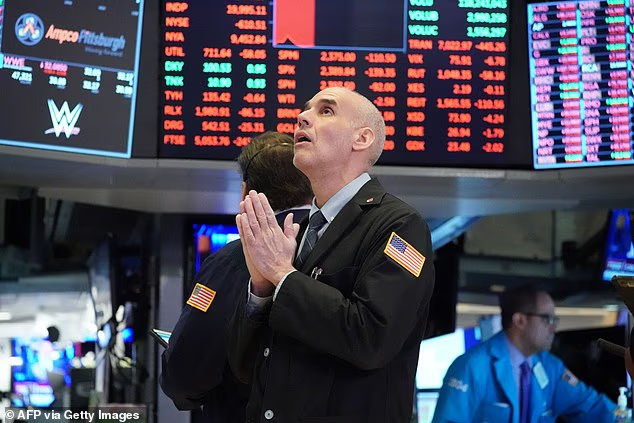
Wall Street’s Stunning Breakdown Leaves Markets in Shock
Wall Street just witnessed one of its most dramatic reversals in months. What began as a powerful early rally collapsed into a brutal selloff by the end of Thursday’s session, leaving investors stunned and scrambling for answers.
Technology stocks — the same group celebrating early gains on the back of Nvidia’s strong earnings — suddenly led a massive market-wide decline. By the closing bell, both the Nasdaq and S&P 500 had sunk to their lowest levels in months, and the markets’ main fear gauge exploded to highs not seen since spring.
The day started with hope.
It ended with panic.
And the message from Wall Street couldn’t be clearer: confidence is cracking.
The Rally That Vanished in Hours
Morning Optimism: Nvidia Sparks a Tech Surge
Investors woke up ready to celebrate. Nvidia had delivered another impressive earnings report, lifting tech stocks and raising hopes that the sector could finally regain momentum. The Nasdaq jumped early, signaling a potential rebound after weeks of pressure.
But Wall Street didn’t get a rally. It got an ambush.
The Turning Point: U.S. Jobs Data Hits the Market
Midway through the session, new U.S. labor market data dropped — and everything went downhill. Instead of giving clarity, the data did the opposite: it revealed a confusing picture of the job market, making it even harder for investors to predict what the Federal Reserve might do next.
Uncertainty is poison for markets.
And Thursday was a perfect example.
Within hours, optimism evaporated as traders began dumping tech stocks and bracing for the possibility of more economic instability ahead.
Nasdaq and S&P 500 Hit Their Lowest Closes in Months
Nasdaq Plunges to a Two-Month Low
The hardest hit was the Nasdaq, which closed at its lowest level since September 11. This wasn’t just another dip — it was a full reversal of what had been a promising start to the day.
High-growth tech names that had been rallying suddenly turned red. Nvidia’s early boost faded. Other big tech leaders slid even harder, dragging the entire index down with them.
S&P 500 Follows the Same Painful Pattern
The S&P 500 did not escape the damage. It suffered its lowest close since September 10, underscoring the broad-based pressure across nearly every sector.
Investors who spent the morning buying into the rally spent the afternoon watching the floor disappear beneath them.
This wasn’t just profit-taking.
It was a full-blown shift in sentiment.
The Fear Gauge Erupts: VIX Hits Highest Since April
Market Anxiety Explodes
The most dramatic sign of Thursday’s panic came from the Cboe Volatility Index — better known as the VIX, Wall Street’s fear gauge. It surged to its highest closing level since April 24, signaling an intense spike in investor anxiety.
When the VIX jumps sharply, it means traders are bracing for uncertainty, volatility, and potential further declines. Thursday’s spike was not subtle. It was a loud alarm bell.
Investors Are Preparing for More Turbulence
A rising VIX often precedes periods of instability. It reflects fear, hedging, and defensive positioning — and that’s exactly what’s happening now.
Investors aren’t confident.
Investors aren’t comfortable.
Investors are preparing for a rough ride.
Thursday’s reversal wasn’t just a one-day event — it may be the start of a broader shift in market psychology.
Why the Market Crashed: Two Forces Collided
1. Confusing Labor Market Data
Thursday’s jobs report didn’t show consistent strength or weakness. Instead, it added uncertainty. The Federal Reserve is watching the labor market closely for signs of inflation pressure, and unclear data makes predicting the Fed’s next move almost impossible.
When investors can’t see a clear direction, panic fills the gap.
2. Tech Stocks Are Overloaded With Risk
Tech stocks have been carrying the market for months. But they’ve also been carrying the most risk. Their valuations are high, expectations are sky-high, and any negative catalyst can cause a rapid plunge.
Thursday proved it.
The moment confidence cracked, tech stocks led the decline. And when tech falls, everything else follows.
Nvidia’s Strong Earnings Couldn’t Save the Day
What makes Thursday’s reversal even more dramatic is that it came right after one of the biggest tech names delivered excellent news. Nvidia’s earnings easily beat expectations, and many thought it would lead the market higher.
Instead, Nvidia’s performance wasn’t enough to counterbalance the fear triggered by the confusing jobs data.
The market loves good news — until uncertainty shows up.
Then it forgets everything else.
What This Means for the Next Few Days
Expect Larger Swings
A spike in the VIX almost always means bigger price swings are ahead. Traders are preparing for volatility, and markets may move sharply in both directions as new data and Federal Reserve comments roll in.
Tech Will Stay Under Pressure
Tech stocks are still the most sensitive group to interest rates, inflation concerns, and macroeconomic uncertainty. Unless economic data becomes clearer, the sector could continue to struggle.
The Battle for Market Direction Has Just Begun
Thursday didn’t just erase a rally. It shifted the entire tone of the market.
Investors are now watching:
Upcoming labor reports
Inflation numbers
Federal Reserve statements
Bond yield movements
Any new piece of data could swing the market aggressively. With the VIX elevated, fear is back — and it won’t fade overnight.
Wall Street Faces a New Reality: Stability Is Gone
Thursday’s selloff was a dramatic reminder that the market is still fragile. Confidence can shift in minutes. Data can distort expectations. And tech stocks, even after strong earnings, remain highly vulnerable.
A rally that started with excitement ended with the worst kind of uncertainty.
The next few sessions will reveal whether Thursday was a temporary shock — or the beginning of a deeper market downturn.
One thing is certain:
Wall Street is no longer calm.
Wall Street is rattled.
And the fear index is telling everyone to buckle up.
